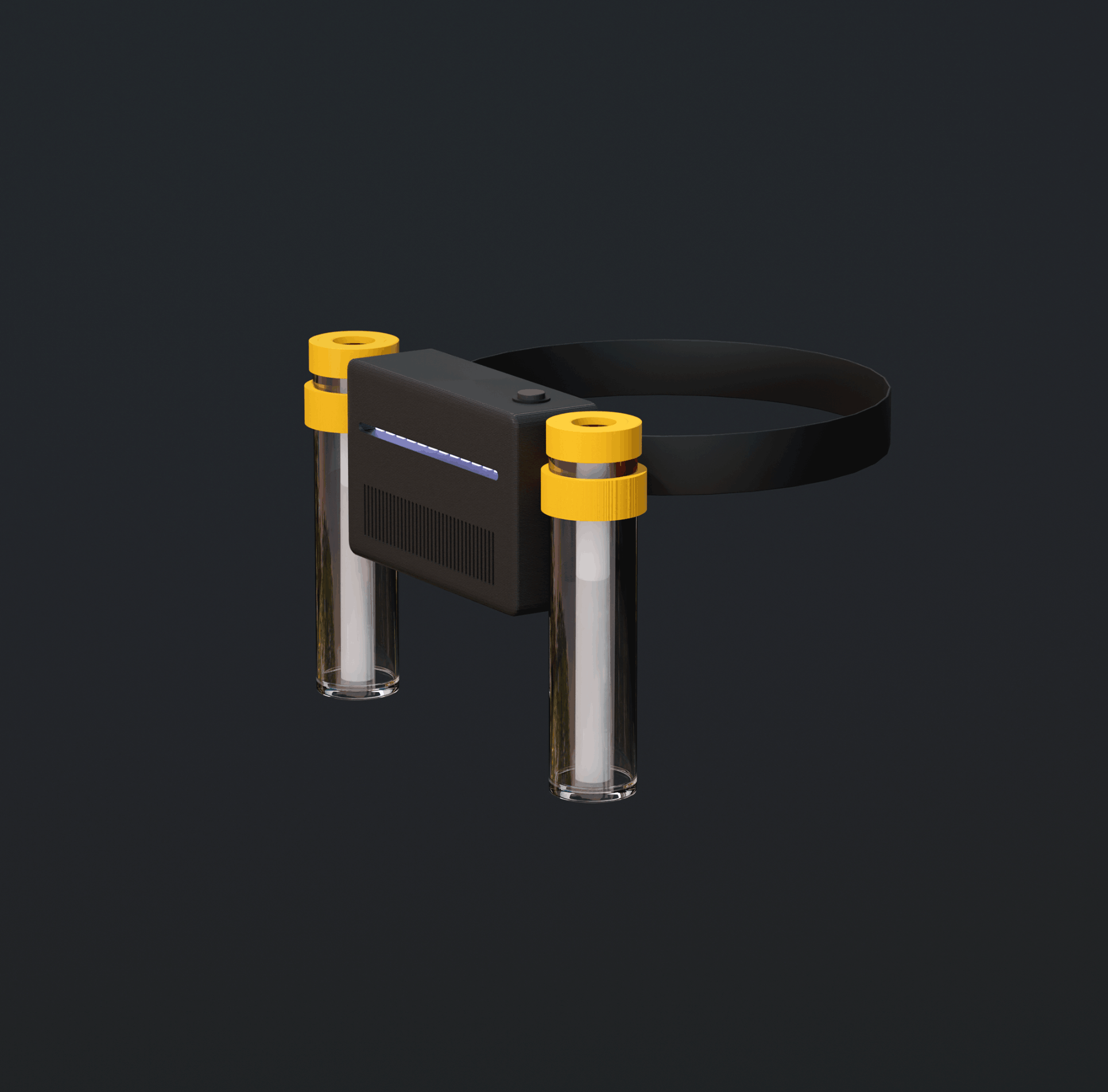
Propogate attentiveness towards unshielded and everchanging outdoor realities considering nonhuman inhabitants. Encourage care in urban multispecies communities. Create connections in a shared time and space. Create a product for a vision that includes and values nonhuman stakeholders in shared urban realities.
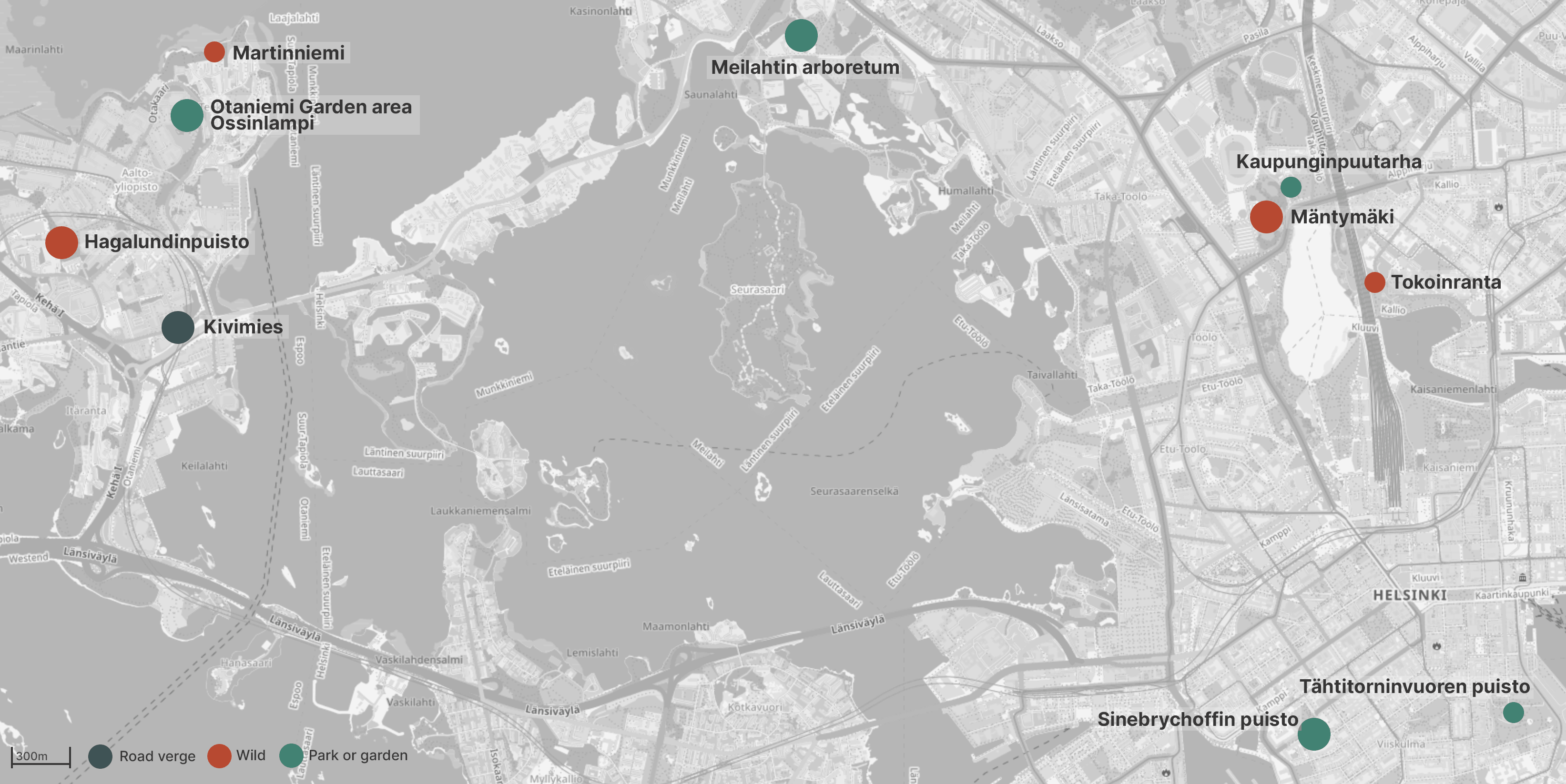
During the discovery phase, I noticed fewer pollinators in groomed and maintained city parks than in urban wild zones. To my inexpert eye, it suggested that the lack of wild plants, natural vegetation and uninterrupted life processes seemed to drive the pollinators to forage and nest in wilder areas. According to Ayers and Rehan, due to their heterogeneity, cities often display a higher degree of biodiversity than other areas, however, local features are crucial to pollinators, and urban green spaces can be optimized for pollinator habitation by reducing management intensity, increasing native floral richness, and promoting green patch connectedness to ensure pollinator movement (Ayers and Rehan 2021).
Pollinators are often regarded as the protectors of plant biodiversity and food security, and the urban green zones can be adapted to more suitable habitats for various species. Overall, due to the lack of bare ground and the presence of novel nesting opportunities such as cracks in various structures as well as insect hotels in some cases, urban spaces attract more cavity-nesting than ground-nesting bees that also tend to be small-bodied late emerging species (Ayers and Rehan 2021).
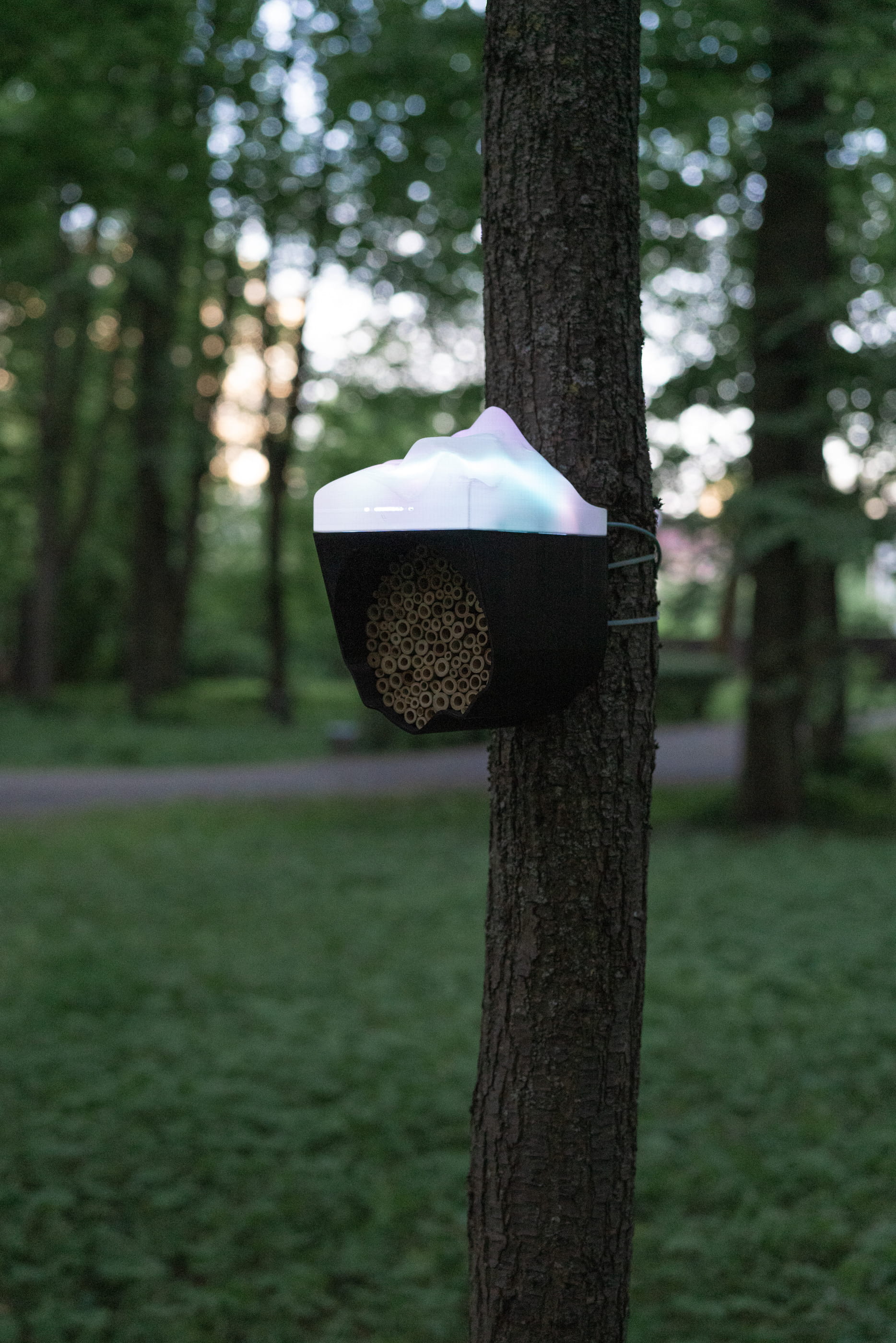
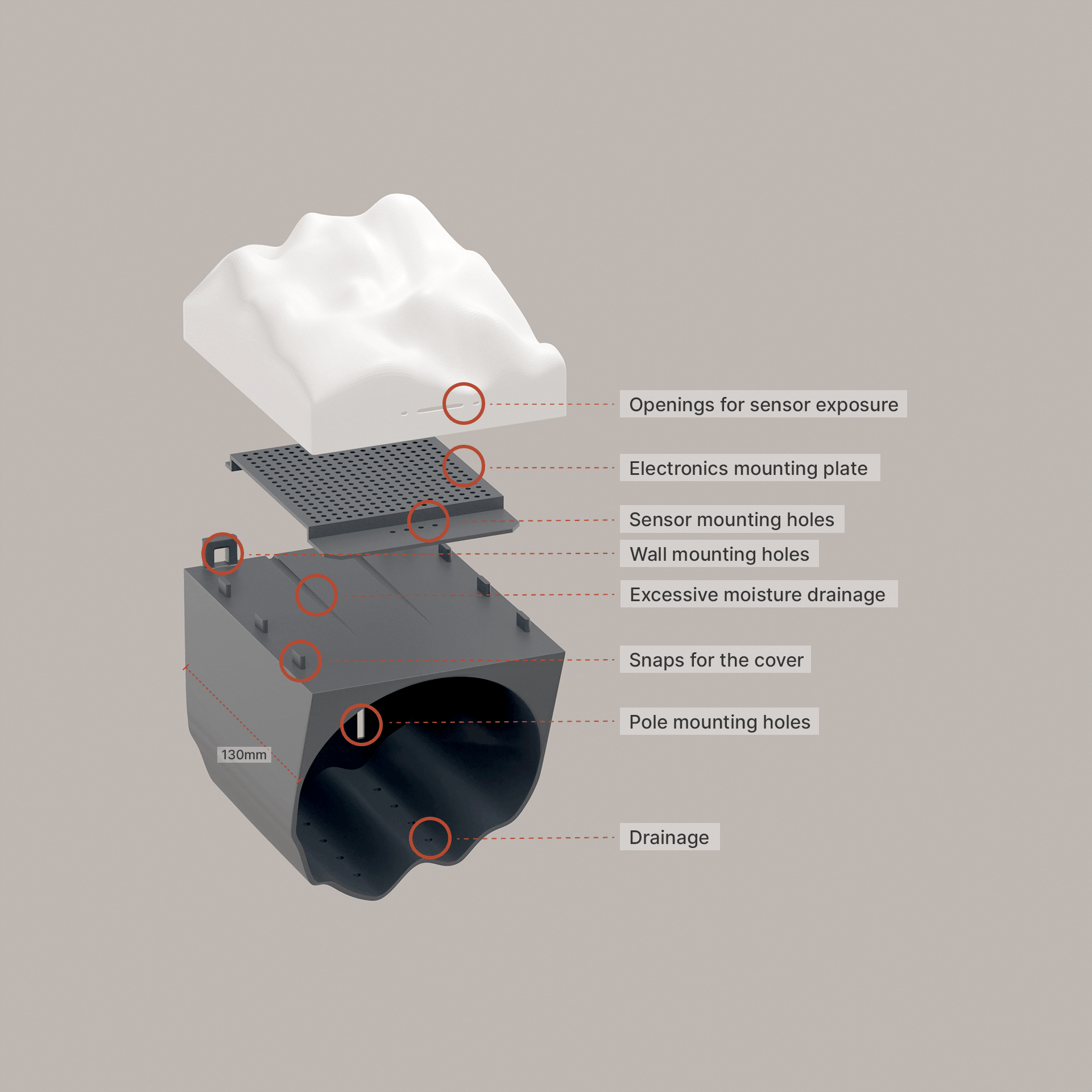
Urban green spaces are often maintained, groomed and managed, thus reducing nesting opportunities. While it might be argued that in-action, e.g. non-management and development of urban wild zones, could be the most successful strategy, I decided to create a bee hotel that would serve as a light piece at the same time, proposing a possibility of creating interactive objects that serve both nonhumans and humans.